
Would you dare to wear Meta's AI pendant that can "listen" to you?
2026-06-07 21:00:00
According to TechCrunch, Meta is secretly developing an AI wearable pendant that can be worn around the neck or clipped to clothing like a brooch. This small device is not just an ordinary accessory; it contains a microphone, camera, and AI chip, enabling it to listen to your surroundings in real time and even interact with you. Currently in internal testing, this isn't Meta's first foray into wearable AI. From smart glasses developed in collaboration with Ray-Ban to the AR glasses Project Aria, this is Meta's third generation of personal AI devices.
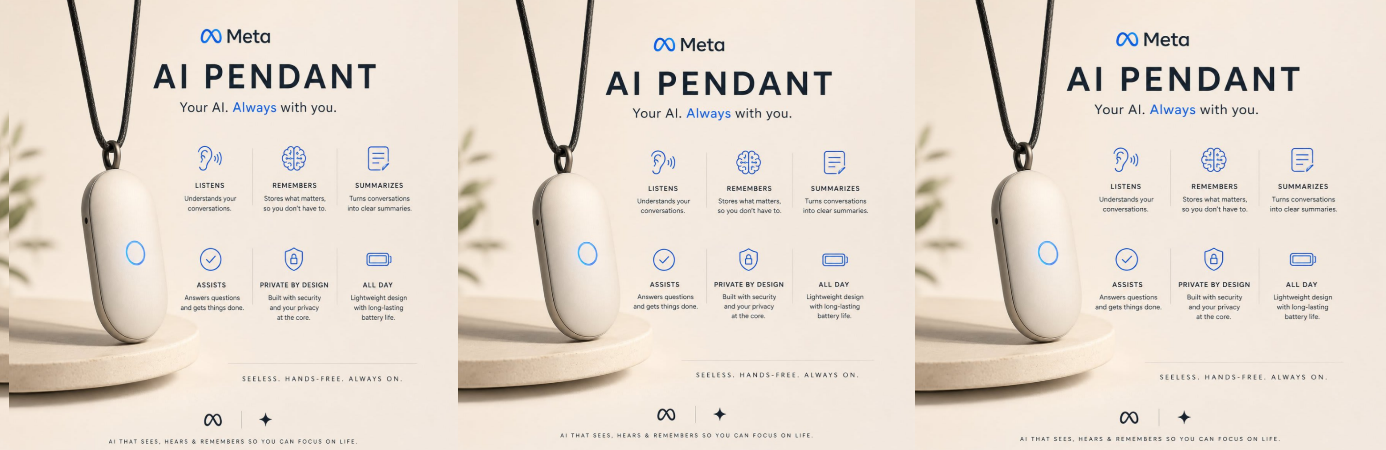
You might wonder why Meta doesn't just stick to making watches or bracelets, but instead opts for a pendant-like device. This relates to the ergonomics of AI wearable devices. Even the best smartwatches have a limitation: you still need to raise your arm, look down, and look at the screen – essentially, you're still controlling the device. The AI pendant operates entirely differently: it has no screen, relying entirely on voice and AI for interaction. You don't need to take out your phone or look at the watch; simply speak, and the pendant responds, freeing your hands and eyes. This is a very wise choice; Meta aims to eliminate even the need to take your phone out of your pocket. Furthermore, the AI device worn around the neck is closest to your mouth, ensuring the best sound pickup and most natural response. While the price hasn't been officially announced yet, we can use it as a reference for similar products. Last year, Humane launched the AIPin, priced at $699 with a $24 monthly fee. The market response was lukewarm, citing its high price and unsatisfactory functionality. Another product, the Rabbit R1, priced at $199, sold reasonably well but also drew criticism, with some calling it "just an Android phone with an AI shell." Meta's advantage lies in its ecosystem. Meta possesses the Llama model, has experience in large-scale production of Ray-Ban glasses, and enjoys a large user base on Instagram and WhatsApp. If Meta can keep the pendant's price between $200 and $300, combined with its mature AI capabilities, it could potentially achieve a game-changing breakthrough. Don't forget, Meta has historically never hesitated to promote hardware products at near-cost prices; the QuestVR headset is a prime example of this strategy. The most controversial aspect of this pendant, without a doubt, is its 24-hour ambient sound recording function. How will privacy be properly addressed? Meta has clearly considered this issue. According to leaks, Meta's solution is that the device does not record by default; it only starts recording when a specific wake word is detected or the user actively triggers it. Furthermore, all processing is done locally on the device and is not uploaded to the cloud. However, whether netizens will accept this is another matter. After all, Meta has a history of privacy issues, and the data breach scandal during the Facebook era is still fresh in everyone's memory. If we envision AI wearables as a "closely fitting smart device," then Meta's layout gradually becomes clear: the glasses handle viewing and display, the pendant listens and facilitates communication, and the headphones handle private information output. These three different devices each fulfill specific responsibilities, combining to form a complete, almost imperceptible AI interaction system.
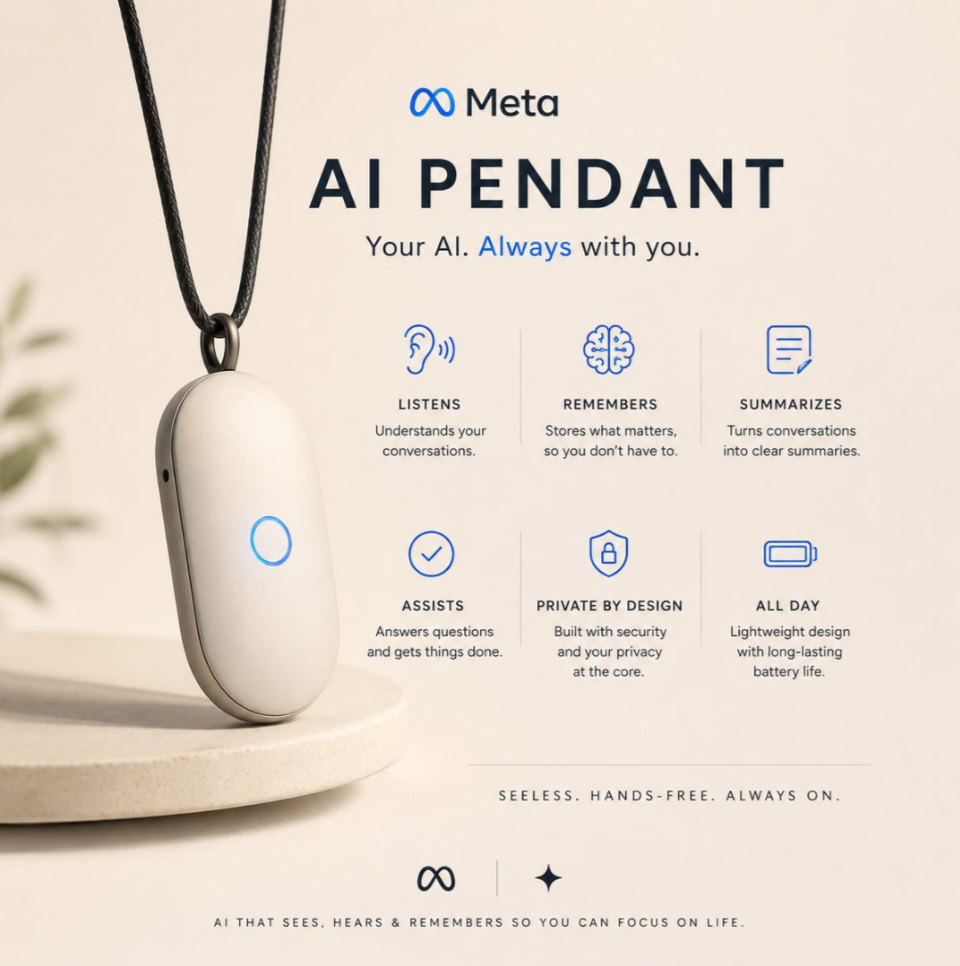
You no longer need to take out your phone, look down at the screen, or type; AI exists beside you in its most natural state. If Meta can properly address privacy issues and adjust the price to a level that most people can afford, then the next hot area for wearable AI might not be on your wrist, but on your chest.
